OPENBSD FOUNDATION
PF, WireGuard, Unbound, TLS and a hardened host.
SECURE COMMUNICATIONS / OPENBSD
OPENBSD SECURE MAIL PLATFORM
Email is the backbone of every organization. This platform combines a hardened OpenBSD mail stack with OSMAP, secure browser access, strong identity controls, filtering, monitoring, backup and recovery.
WHY THIS PLATFORM
PF, WireGuard, Unbound, TLS and a hardened host.
Rust webmail, server-rendered, no runtime JavaScript.
Postfix, Dovecot, Rspamd, ClamAV and standards-based mail.
Monitoring, staged updates, backup, recovery and verification.
THE USER EXPERIENCE
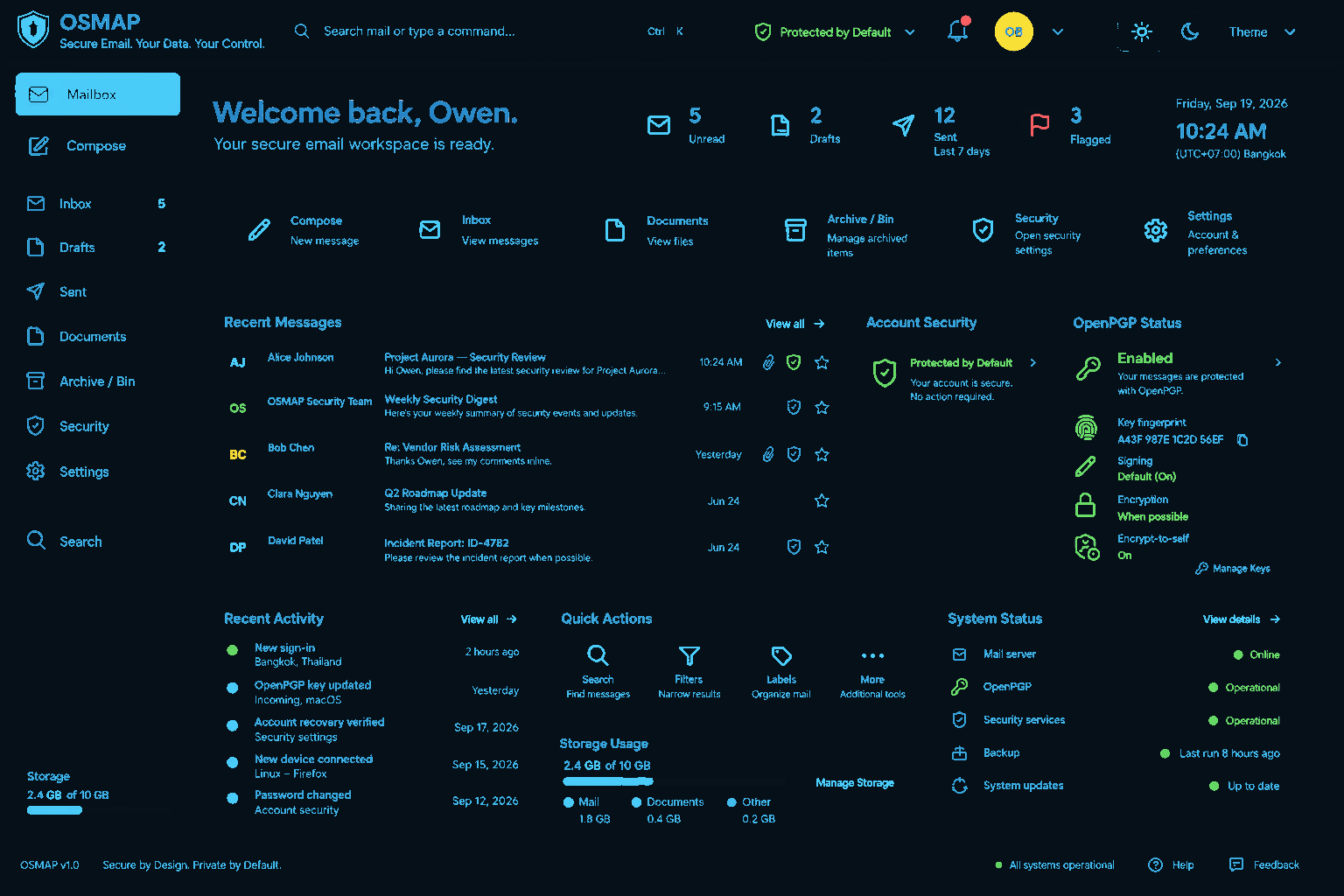
OSMAP turns hardening into an understandable product experience: mail, composition, search, documents, identity, privacy, security state, key management and account recovery.
Inbox, search, drafts, documents and clear operational state.
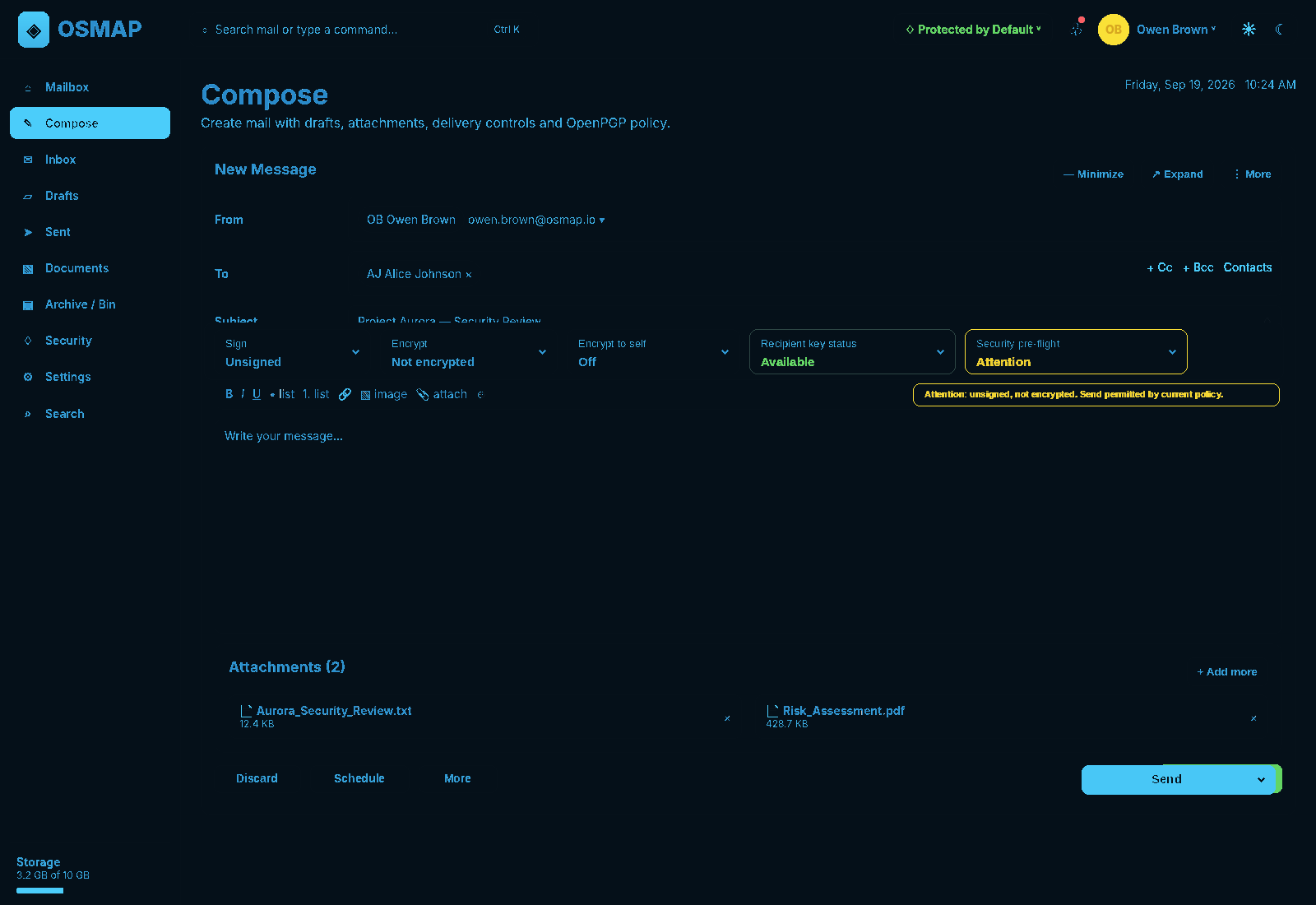
Identity-aware composition with policy-driven security preflight.
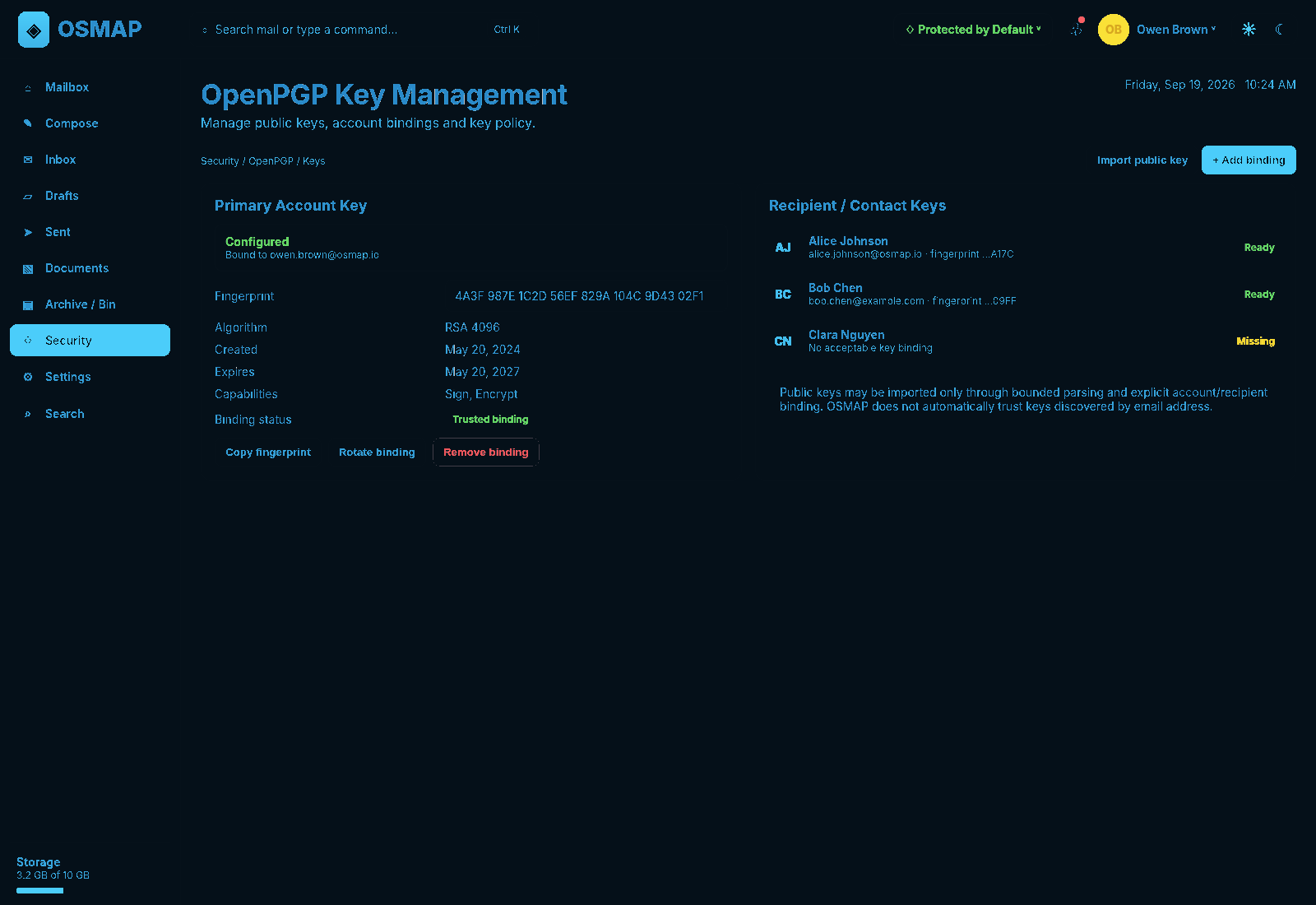
Key status, trust readiness, fingerprints and governed account actions.
Approved UX direction; runtime OpenPGP operations are not yet implemented.
DEFENSE IN DEPTH
The web interface never becomes the mail authority. Public access terminates at nginx; mailbox authority, transport, filtering and operations remain separated behind explicit boundaries.
BUILT FOR REAL OPERATIONS
Password + TOTP, bounded sessions, revocation and recovery workflows.
Server-rendered UI, sanitization, remote-content blocking and bounded parsing.
SMTP, IMAP/LMTP, Rspamd, ClamAV, Redis and policy-controlled delivery.
PF, optional Suricata, health reporting, alerts, SBOM and patch governance.
Staged restores, configuration verification and repeatable recovery procedures.
Phased apply/verify workflow, QEMU validation and OpenBSD autoinstall support.
OPEN BY DESIGN
The reusable platform is auditable and reproducible. Site-specific credentials, keys, telemetry and recovery material remain outside public source control.
Public application
Rust, server-rendered UX and security-focused browser access.
Public framework
Reproducible build, validation, hardening, operations and recovery.
Organization-owned state
Secrets, keys, live telemetry, provider state and site-specific controls.
SECURE EMAIL, WITHOUT THE SAAS DEPENDENCY